
Late supplier invoices: record the work in the right month
A maintenance contractor finishes a routine service visit on 30 September. The approved work record shows 32 hours at the agreed rate of 150, in generic currency units. No bill has arrived and nothing sits in the bill inbox, but September closes this week. If the ledger waits for the invoice, September looks cheaper than it was and October carries a cost it did not incur. The answer is an accrual, provided the evidence shows the work was done by the cutoff and someone owns clearing it when the bill arrives. The example is hypothetical, and tax, foreign currency and capital work are left out.
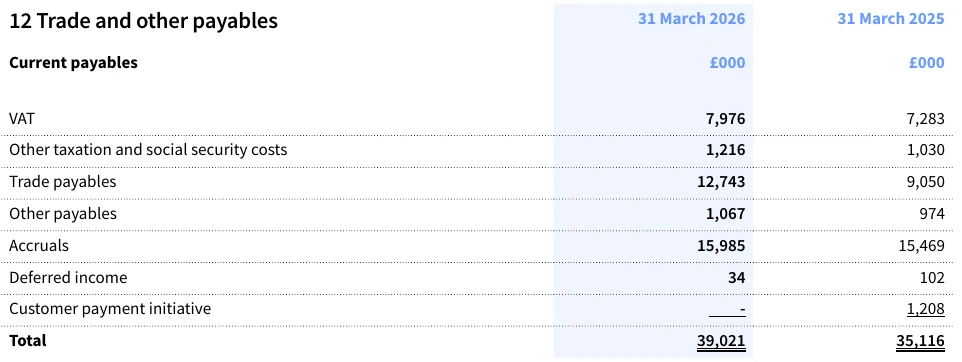
Accrual or payable: the line the standard draws
IAS 37 distinguishes trade payables from accruals in paragraph 11. Trade payables are amounts for goods or services that have been invoiced or formally agreed with the supplier. Accruals are amounts for goods or services already received but not yet paid, invoiced or formally agreed. Their amount or timing sometimes has to be estimated, though generally with less uncertainty than a provision.
Paragraph 11 defines the liability. Paragraph 8 leaves the question of whether a cost is an expense or part of an asset to other standards, and neither paragraph is a tax deduction rule. The example uses a service consumed in September, so the debit is an expense.
Sources and context, checked :
Test the service date, not the invoice date
The cutoff question is whether the service was received by the period end. An invoice date shows when the supplier billed. A remaining budget shows what someone expected to spend. Neither shows when the work happened.
We recommend asking budget holders for work received by the cutoff, not a list of open purchase orders, then checking the ledger and bill intake for an existing entry before posting. Each line on the accrual schedule should hold:
- Supplier and the dates the service was performed
- Contract or agreed rate
- Accepted hours or other completion evidence
- The calculation and the ledger account
- Preparer, approver and the person who will match the later invoice
The worked entries
The 32 approved hours at 150 give a supported estimate of 32 × 150 = 4,800. The table uses a reversing method, which is one illustrative way to clear an accrual, not a requirement of the standard.
| Date and action | Debit | Credit | Effect |
|---|---|---|---|
| 30 September: accrual | Maintenance expense 4,800 | Accrued expenses 4,800 | September records the consumed service |
| 1 October: reversal | Accrued expenses 4,800 | Maintenance expense 4,800 | Removes the estimate under this method |
| October: bill for exactly the same work | Maintenance expense 4,800 | Trade payables 4,800 | October net expense for this work is nil |
| Payment | Trade payables 4,800 | Bank 4,800 | Clears the payable; no new expense |
Clear it once
September carries 4,800 of expense. October's net expense for the work is -4,800 + 4,800 = 0.
The common alternative skips the reversal and posts the bill against the accrual: debit accrued expenses 4,800, credit trade payables 4,800. Choose one method. Reversing on 1 October and then also debiting accrued expenses for the bill clears the same estimate twice. The accrual account ends with a 4,800 debit and October expense is understated by 4,800.
When the bill differs or never arrives
A reversal removes the estimate from the ledger. It does not prove the obligation has ended. If no bill has arrived by the next close, reassess the evidence and carry the supported amount forward.
If the bill differs from 4,800, compare its scope and quantity with the work record. The accounting owner then decides which period the difference belongs to. A later invoice date does not, by itself, put the whole difference in October.
For financial statements, IAS 10 adds a test. An event between the reporting date and authorisation of the statements is an adjusting event if it gives evidence of conditions that existed at the reporting date, so a bill for September work can change the September figure. A routine monthly pack may have no equivalent authorisation step, so set its own cutoff for late information.
Suppose the schedule also carries an August accrual for cleaning visits with no bill and no confirmation of how many visits took place. Before the October close, its owner needs the supplier's record of visits and rate, or evidence that the visits did not happen.
Sources and context, checked :