
Hobby or business: records that show a profit motive
A recurring side activity that loses money is not automatically a hobby, and one with a tidy spreadsheet is not automatically a business. For Schedule C purposes, the question is whether the activity is carried on with a profit objective and with continuity and regularity. Federal regulations give more weight to objective facts about how an activity is run than to statements of intent, so the practical work is keeping records of what the owner actually does, especially in years when results are poor. This article covers US federal classification for individuals. It does not make a case-specific determination or calculate deductible hobby expenses.
What the IRS tests
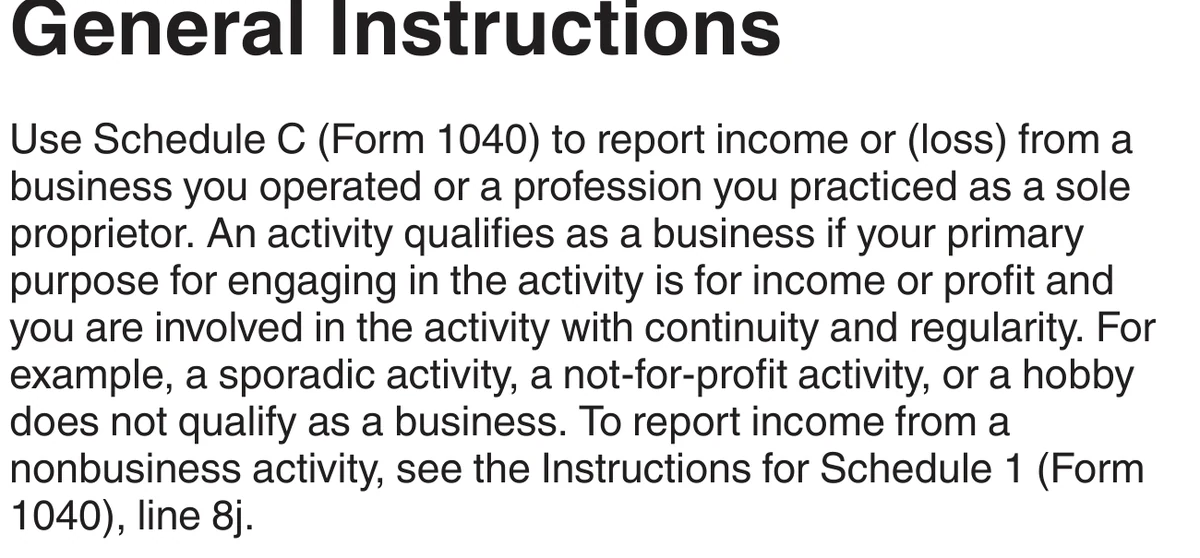
The Instructions for Schedule C (Form 1040) say the primary purpose of a business must be income or profit, and the person's involvement must have continuity and regularity. Sporadic activities, not-for-profit activities and hobbies do not qualify as a business for that purpose.
A profit is not required in every year. IRS Publication 334 says an actual profit is not necessary for a trade or business if a profit motive exists and ongoing efforts further the business.
The classification matters. An IRS fact sheet from October 2022 explains that losses from an activity not engaged in for profit cannot offset other income.
How the factors are weighed
The regulation at 26 CFR 1.183-2 lists factors including businesslike conduct with accurate records, the expertise of the person or their advisers, time and effort spent, expected appreciation of assets, success with similar activities, the history of losses, occasional profits, the person's financial status and elements of personal pleasure. It also treats documented changes to unprofitable operating methods as evidence that can support a profit motive.
All the facts are considered. No single factor decides the result, and the factors are not counted up as a majority score. The IRS fact sheet asks similar questions about businesslike records, changes in methods, expertise and the causes of losses.
Forming an LLC, opening a bank account or building a spreadsheet does not by itself prove a business. Each is one fact among many.
Sources and context, checked :
A hypothetical comparison
Hypothetical, for comparison only and not a tax determination: an individual runs a recurring custom-printing activity with annual receipts of $12,000 and recorded costs of $15,000, an arithmetic shortfall of $3,000. In both versions below, customer orders, advertising and hours show recurring sales activity. The amounts do not establish whether any expense is deductible, and no tax or allowable loss is calculated.
Both versions show the same $3,000 shortfall, but they give different objective evidence about how the activity is run. Neither is decided automatically by one missing record or one profitable year. Version A's records support an assessment of the activity's operation; they cannot certify a profit motive or establish a deductible $3,000 loss.
| Record | Version A | Version B |
|---|---|---|
| Spending | Personal purchases kept separate | Personal purchases mixed in |
| Pricing | Dated cost review finds a low-margin product; price raised and an unprofitable delivery option dropped | No pricing review |
| Response to the shortfall | Revised budget, relevant adviser's advice and later actual results kept | No effort to change an uneconomic activity |
Start the record file now
The records that help are ordinary operating records kept at the time, not explanations written later.
- Keep personal spending separate and retain receipts and customer sales records.
- Date each pricing or cost review, record the change made and track the later results.
- Log time spent, relevant expertise, advice actually followed and the cause of any unusual loss.
- If expected appreciation of an asset is part of the profit case, keep evidence for it rather than simply asserting it.
Before reporting a loss
Pull the current year's records into one file and ask the return preparer to assess the complete facts against the regulation's factors before any loss is reported as a business loss.