
Estimate change or prior-period error: what was known at the time?
Two years after buying a £60,000 machine, the operations team says it will run for six more years, not three. Depreciation has to change, but how depends on why the expectation changed. Under IAS 8, new information, new developments or more experience lead to a change in accounting estimate, recognised prospectively. A material mistake made despite reliable information available when the earlier accounts were authorised is a prior-period error, corrected retrospectively. The test is what was known, or could reasonably have been obtained and considered, at the time.
Estimates move with new information
Accounting estimates are monetary amounts subject to measurement uncertainty, such as a depreciation charge that depends on useful life. A change resulting from new information or developments is not the correction of an error. It is recognised prospectively, in the current period and in future periods if both are affected, and any related asset or liability is adjusted in the period of change (IAS 8 paragraphs 5 and 32 to 38). Prospective does not mean waiting until next year.
This definition comes from amendments effective for annual periods beginning on or after 1 January 2023. IFRS 18 later renames IAS 8, but the distinction is not new. This article covers full IFRS; a change in measurement basis is an accounting policy question, and events between the reporting date and authorisation need an IAS 10 assessment.
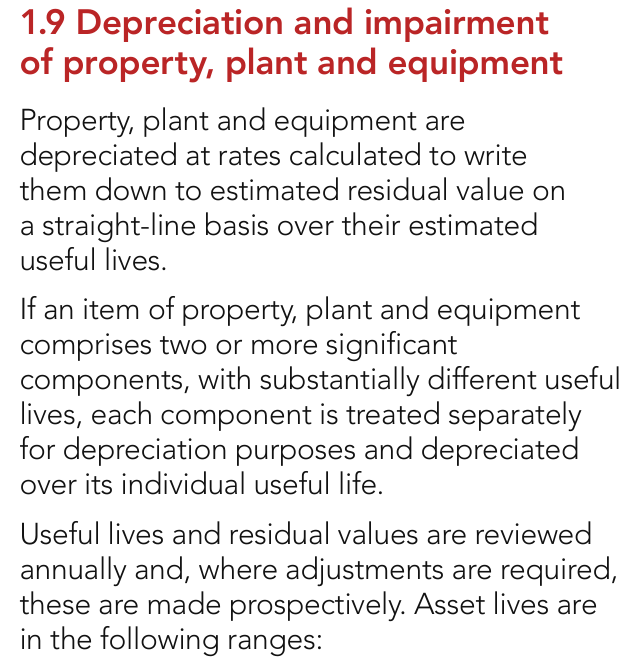
The Government Property Agency's 2025/26 accounts describe an annual review of useful lives and residual values, with changes made prospectively. That is an estimate review policy and says nothing about errors.
The estimate change
In this hypothetical, the machine has no residual value and straight-line depreciation remains appropriate. There is no tax, impairment or revaluation. A five-year life was reasonable at purchase. New operating evidence arrives at the start of year 3, after the earlier accounts were authorised, and supports six remaining years.
Years 1 and 2 stay as they were. From year 3: Dr depreciation expense £6,000; Cr accumulated depreciation £6,000, each year.
| Step | Calculation | Amount |
|---|---|---|
| Annual depreciation, years 1 and 2 | £60,000 ÷ 5 | £12,000 |
| Accumulated after two years | 2 × £12,000 | £24,000 |
| Carrying amount at start of year 3 | £60,000 less £24,000 | £36,000 |
| Annual depreciation from year 3 | £36,000 ÷ 6 | £6,000 |
When it is an error instead
Take a separate case. The five-year life was right and fully supported at the time, but a spreadsheet posted £10,000 a year instead of £12,000. After two years depreciation is understated by £4,000 and the carrying amount is £40,000 instead of £36,000. Nothing new was learned about the machine. Reliable information was available and was not used correctly.
If material, the error is corrected retrospectively in the first accounts authorised after discovery, unless that is impracticable. Comparatives are restated, or, if the error arose before the earliest period presented, the opening balances of that period. The nature of the error and the amounts are disclosed, and hindsight is not used (paragraphs 41 to 49 and 50 to 53).
Suppose the year 3 accounts present year 2 as the only comparative. Year 2 depreciation is restated from £10,000 to £12,000, and year 2 opening retained earnings fall by £2,000 for year 1. In the books: Dr retained earnings £4,000; Cr accumulated depreciation £4,000. The £4,000 does not go through year 3 depreciation, which is £12,000.
Sources and context, checked :
Keep an evidence note
A later outcome does not, by itself, prove an earlier reasonable estimate was wrong, and calling a mistake a revised estimate does not make the old evidence irrelevant. Before posting either kind of adjustment, write down the original assumption and what supported it, the later information and when it arrived, the discovery date, the periods affected, the materiality assessment and the conclusion. The note should explain why the treatment changed, not just produce a new number.