
Business loan payments: split interest from the balance still owed
A business pays its lender 600 at the end of every month, and the bookkeeper posts each bank debit the same way: 480 off the loan and 120 to interest. The bank reconciliation passes every month. The loan account still goes wrong. In the fixed-rate example below, interest is calculated on the falling opening principal, so the split changes with each payment. One payment does two jobs. It pays a financing cost and reduces the amount still owed, and the schedule has to track both.
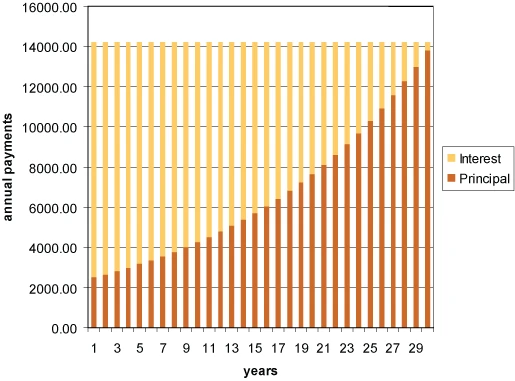
What each part of the payment does
The CFPB's explanation of mortgage payments sets out the mechanics. Principal payments reduce the amount you owe; interest payments do not. In a typical fixed-rate amortizing loan, the combined principal and interest payment stays the same while the mix inside it changes. Consumer mortgages can also include amounts for taxes and insurance, and business loan terms vary, so treat this as a picture of the mechanics rather than a description of any particular business loan.
An archived Federal Reserve consumer guide charts the same pattern across 30 years of a 200,000 dollar fixed mortgage at 5.9%: equal payments, with interest shrinking and principal growing year by year. Its rates and refinancing advice are historical.
Where each part goes in the ledger
Intuit's QuickBooks Online help describes a simple setup. A liability account tracks the outstanding loan, repayments of principal are recorded against that account, and interest goes to an expense account. That suits the plain loan in the example below. It does not mean every financing charge on every loan is expensed immediately.
Sources and context, checked :
A two-month schedule
This example is hypothetical. The opening principal is 12,000. Interest is 1% a month on the principal at the start of the month, the payment is 600 at month end, there are no fees, and interest is expensed as incurred.
Month one is posted as a debit to the loan of 480, a debit to interest expense of 120 and a credit to bank of 600. Month two is a debit to the loan of 484.80, a debit to interest expense of 115.20 and the same 600 credit to bank.
Over two months, cash paid is 1,200, interest is 235.20 and principal falls by 964.80. 12,000 - 964.80 = 11,035.20, which matches the schedule.
| Month | Opening principal | Interest at 1% | Principal repaid | Closing principal |
|---|---|---|---|---|
| 1 | 12,000.00 | 120.00 | 480.00 | 11,520.00 |
| 2 | 11,520.00 | 115.20 | 484.80 | 11,035.20 |
What copying the first split does
If month two is posted with the month-one split, interest expense shows 240 instead of 235.20 and the loan account shows 11,040 instead of 11,035.20. Both are 4.80 out, and the bank still reconciles because each payment is still 600. Under this example's fixed-rate, month-end assumptions, the principal share keeps rising, so a copied split drifts further each month.
Reconcile to the lender, not just the bank
Our recommended routine:
- Get the loan agreement, the latest lender statement and the current schedule, and confirm the borrowing entity, opening principal, rate, payment dates, fees and how interest accrues.
- For each payment, record principal, interest and any separately identified charges. Tie the total to the bank and the principal to the outstanding balance.
- Keep the principal balance separate from interest accrued but not yet paid, so the comparison with the lender statement is like for like.
- When matching a bank payment to a loan entry already recorded, do not post a new expense as well.
- Investigate extra drawdowns, missed or early payments, rate resets and fee changes before reusing an old allocation.
Loans this example does not fit
Interest-only, balloon, variable-rate, discounted and fee-bearing loans each need their own schedule, and interest calculated daily can differ from an annual rate divided by 12. Some financing costs are not expensed straight away under financial reporting rules, and this article gives no view on tax deductibility.
Check this month's balance
Ask the lender for a statement at your last month end and compare its principal balance with your loan account. If they differ, rebuild the schedule from the agreement before posting next month's payment.