
Onerous contracts: measure the loss with directly related costs
A fixed-price service contract has £100,000 of customer consideration still to come and £90,000 of labour and materials still to spend. On that view it makes £10,000. Add the £20,000 of equipment depreciation that relates directly to doing the work, and it loses £10,000. Under IAS 37 as adopted in the UK, the cost of fulfilling a contract includes both the incremental costs and an allocation of other costs that relate directly to fulfilling contracts. Once assets used on the contract have been tested for impairment, the provision is the lower of that net loss and the net cost of getting out of the contract.
When a contract becomes onerous
IAS 37 requires a provision for the present obligation under an onerous contract. A contract that can be cancelled without paying compensation creates no obligation, and ordinary executory contracts that are not onerous are outside this part of the standard (IAS 37, paragraphs 66 to 67). A contract is onerous when the unavoidable costs of meeting its obligations exceed the economic benefits expected from it. Unavoidable costs are the least net cost of exiting, comparing the cost of fulfilling the contract with any compensation or penalties for not fulfilling it (paragraph 68). This article covers an executory non-financial service contract, not insurance contracts under IFRS 17 or recognised leases under IFRS 16.
The cost of fulfilling includes incremental costs, such as direct labour and materials, and an allocation of other costs that relate directly to fulfilling contracts, such as depreciation of equipment used on them (paragraph 68A). Head-office costs that do not relate directly to the contract stay out. That rule came from an amendment issued in May 2020 and effective for annual periods beginning on or after 1 January 2022 (paragraph 105). The IASB's separate project on targeted improvements to IAS 37 was still being redeliberated in September 2026, and its tentative decisions are not effective requirements.
Before recognising a separate onerous contract provision, recognise any impairment loss on assets used to fulfil the contract (paragraph 69). Otherwise the same loss can be counted twice.
A hypothetical contract
This example is hypothetical, in pounds, and covers the remaining obligations on one contract. An asset impairment review has found no impairment. Unrelated head-office administration of £5,000 is excluded. Cancelling would end both performance and the right to the customer's consideration, and would require £15,000 of compensation with no other rights, costs or obligations. Amounts are material and short-term, so discounting is immaterial.
Fulfilling loses £10,000 and cancelling costs £15,000, so the provision is £10,000: Dr onerous contract expense £10,000, Cr provision £10,000. If the cancellation amount were £6,000 on otherwise identical terms, the least net cost would be £6,000, and that would be the provision.
Compare like with like. Cancelling forfeits the £100,000, so it cannot be deducted from the cancellation path as well. A poor management margin is a prompt to assess, not an automatic provision, and future general operating losses are not provided for.
| Hypothetical remaining contract | Amount |
|---|---|
| Expected benefits if fulfilled | £100,000 |
| Incremental fulfilment costs | £90,000 |
| Other directly related allocated costs | £20,000 |
| Total cost to fulfil | £110,000 |
| Net loss if fulfilled | £10,000 |
| Net cost to cancel, forfeiting customer consideration | £15,000 |
| Provision, the least net unavoidable cost | £10,000 |
Sources and context, checked :
Keep a contract file
We suggest starting from the enforceable remaining rights and obligations, including approved variations and the cancellation terms. Forecast the remaining benefits and the direct cost pool, explain the allocation basis and exclude unrelated future spending. Review the assets used on the contract for impairment, then recompute the provision so the same loss is not booked twice. Compare each feasible way to fulfil or exit on a net basis with consistent rights, costs and timing, and document discounting where it is material.
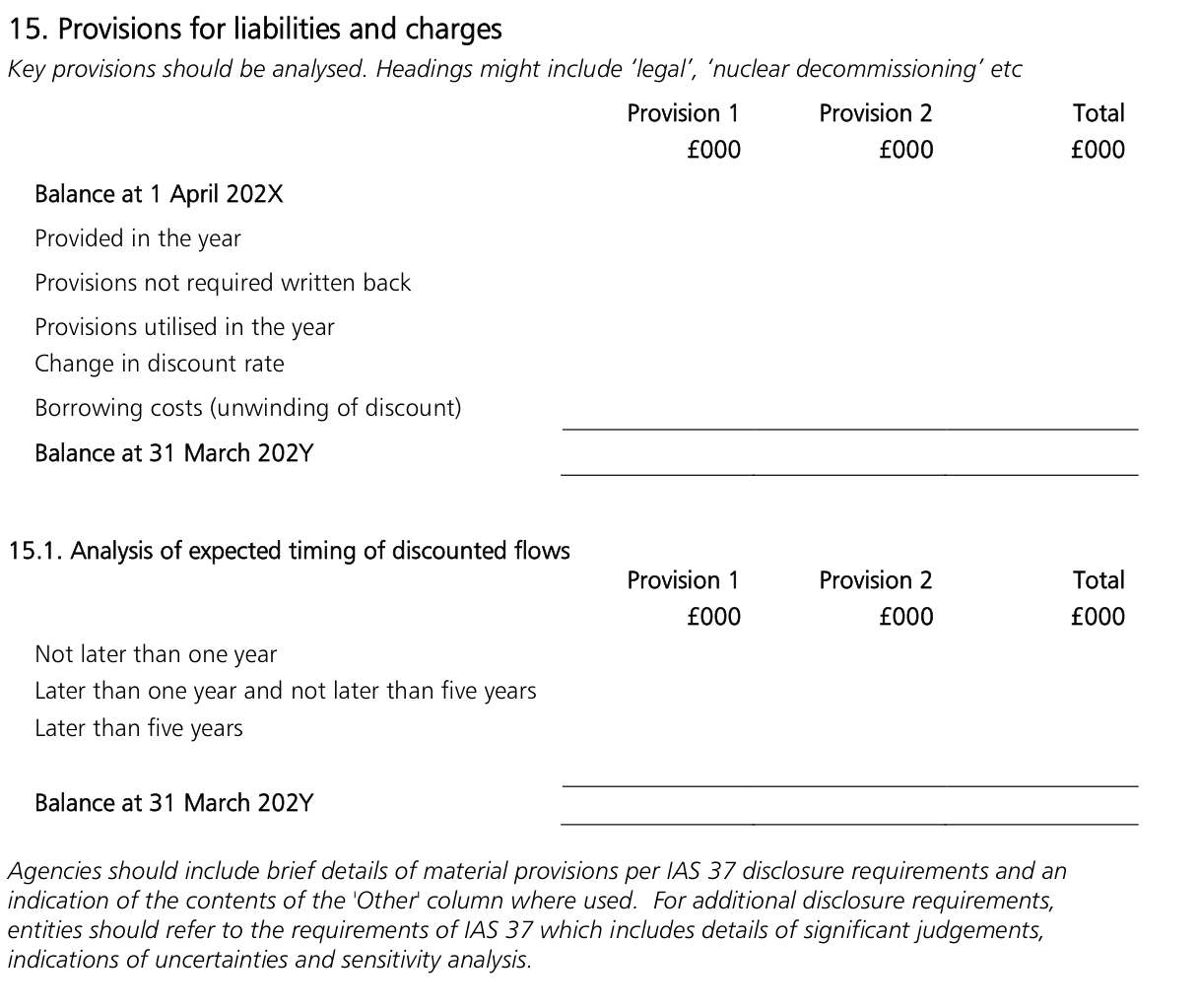
At each reporting date, record the provision movement, expected settlement timing, uncertainties and disclosures. HM Treasury's 2026/27 Agency Pink, an illustrative set of accounts for a fictitious agency, separates provision movements from the expected timing of payments and asks for IAS 37 uncertainties and judgements. It is a format, not a contract calculation.
Sources and context, checked :
At the next contract review
For each loss-making contract, put the allocated direct costs, the impairment conclusion and the signed cancellation terms in one file, and calculate both exit paths on a net basis before the provision is posted.