
Sales commissions: which contract-winning costs become an asset?
A business wins a three-year service contract and owes a £3,000 commission that would not exist if it had lost the sale. It also spent £2,000 on bid salaries and travel, payable whether the bid succeeded or failed. Under UK-adopted IFRS 15, the commission can become a contract acquisition cost asset if recovery is expected. The bid spending does not qualify merely because the sale succeeded. The hypothetical figures lead to different entries and different expense timing.
Would the cost exist without the win?
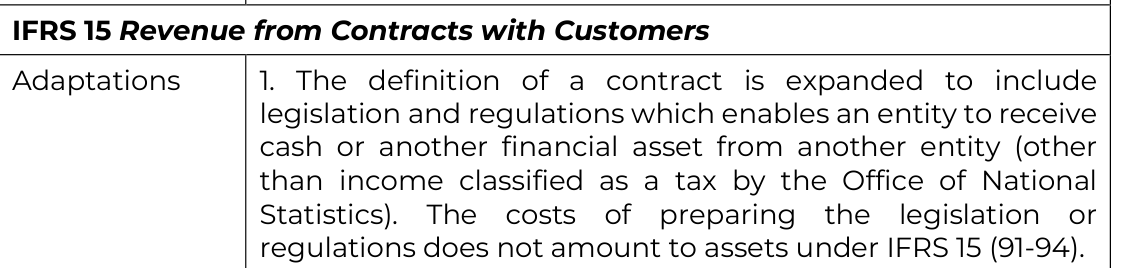
Paragraphs 91 and 92 require an entity to recognise incremental costs of obtaining a customer contract as an asset when it expects to recover them. Incremental means the entity would not have incurred the costs if it had not obtained the contract. A sales commission is the standard's example, but the payment terms still need to pass the test.
A payment labelled commission can fail if it is earned regardless of the sale. Conversely, a success-only payment must also be expected to be recovered; contingency alone does not establish an asset. Paragraph 93 expenses costs incurred regardless of winning unless they are explicitly chargeable to the customer regardless of whether the contract is obtained.
This is the contract-obtaining cost guidance for qualifying customer contracts under UK-adopted full IFRS. Fulfilment costs have different tests. Lease initial direct costs and insurance acquisition costs have their own standards, so a single sales-cost policy cannot be assumed to cover every arrangement.
Sources and context, checked :
Record the commission once
Assume the £3,000 commission is non-refundable, payable only on winning the 36-month contract and expected to be recovered. It relates solely to those 36 months, with no benefit attributed to anticipated renewals and no cost within another standard. The £2,000 bid spending is not chargeable to the customer regardless of outcome.
At the win, record Dr contract acquisition cost asset £3,000; Cr commission payable £3,000. Expense the £2,000 bid spending when incurred. When the commission is paid, record Dr commission payable £3,000; Cr bank £3,000. Payment settles the liability. Expensing another £3,000 at payment would count the same commission again.
Keep the cost asset separate from both the commission payable and the customer revenue balance. A cash reconciliation proves whether the salesperson was paid, not how much of the asset remains unamortised.
Sources and context, checked :
Release the asset with the related services
Paragraph 99 amortises the asset systematically in line with the transfer of the goods or services to which it relates. Those services can include a specifically anticipated renewal. A nominal one-year contract or annual invoice does not automatically establish a one-year amortisation period.
For this example, services transfer evenly over 36 months and there is no impairment. Monthly amortisation is £3,000 / 36, approximately £83.33. Retain sufficient precision and reconcile rounding so that the first 12 months total £1,000, leaving a £2,000 asset. Each release debits amortisation expense and credits the contract acquisition cost asset.
Paragraph 100 requires a significant change in the expected transfer timing to be reflected in amortisation. The period and pattern therefore need support from the related services, rather than being copied from the payroll payment date.
| Asset movement in the first 12 months | Amount |
|---|---|
| Opening asset | £0 |
| Commission capitalised on contract win | £3,000 |
| Amortisation for 12 of 36 months | £1,000 |
| Closing asset, before any impairment | £2,000 |
Sources and context, checked :
The short-period expedient and recovery test
Paragraph 94 permits an entity to expense incremental acquisition costs as incurred if the amortisation period of the asset it would otherwise recognise is one year or less. For a separate example with an established nine-month amortisation period, that practical expedient is available. It is not an exception based simply on the timing of the invoice.
Capitalisation also requires continuing attention to recovery. Paragraphs 101 to 104 compare the carrying amount with remaining expected consideration less directly related costs not yet expensed, reflect customer credit risk, and set impairment sequencing and reversal limits.
Suppose, at a later date in the worked example, the asset is £2,000 and the relevant remaining consideration less unexpensed directly related costs is £1,400. The indicated impairment is £600, subject to paragraph 103's sequencing. This is a contract-specific calculation, not a standard percentage allowance.
Reconcile the asset, payable and disclosure
We suggest keeping the commission agreement, success condition, recoverability evidence, related services and any anticipated renewals together. Reconcile the opening asset plus additions less amortisation and impairment to the closing asset. Reconcile the payable to payroll or supplier records separately.
IFRS 15 paragraphs 127 to 129 require relevant cost-asset disclosures, including closing balances and amortisation and impairment, and disclosure of using the paragraph 94 expedient. Start the review with the payment rule: would this exact cost have been incurred if the contract had been lost?