
Dividends: prove available profits before preparing the voucher
A company has £45,000 in the bank and its directors want to pay a £20,000 dividend. The relevant accounts support £26,000 of realised profits after tax, and £9,000 has already been distributed against them. That leaves £17,000, so this hypothetical dividend is £3,000 too high. A voucher records a dividend after the decision. It cannot supply the profits, and neither can the bank balance.
Start with the relevant accounts
GOV.UK says a dividend cannot exceed available profits from current and earlier financial years, and that it is not a business cost for Corporation Tax. HMRC's manual explains the Companies Act tests in sections 830 and 836: a distribution must be supported by profits available for distribution and by the relevant accounts. The items that matter include profits, losses, assets, liabilities, provisions, share capital and reserves.
The last annual accounts are normally the relevant accounts. Interim accounts may be used where a dividend cannot be justified from those, and initial accounts may be relevant before the first annual accounts. Any further dividend against the same accounts must take earlier distributions into account.
Do not read distributable profit straight off retained earnings. Some accounting gains are unrealised, including investment-property revaluations under IFRS, and not every credit reserve is distributable.
Sources and context, checked :
Run the capacity check first
This hypothetical assumes an ordinary solvent UK private company with one class of equal ordinary shares and no unrealised gain, other reserve restriction, tax omission or disputed loss.
The £45,000 bank balance has no line in the calculation. Cash affordability is a separate practical check, not the legal measure of distributable profits. Nor is £17,000 automatically safe to pay, because creditor duties, current losses, cash needs or other restrictions may intervene, and available profits do not override insolvency duties.
The Insolvency Service says dividends come from retained company profits after Corporation Tax, and warns of repayment and personal consequences for unlawful dividends on a later insolvency.
| Step | Amount |
|---|---|
| Accumulated realised profits after tax, supported by the relevant accounts | £26,000 |
| Earlier distributions not yet subtracted | (£9,000) |
| Remaining distributable profit on these assumptions | £17,000 |
| Proposed dividend | £20,000 |
| Excess over remaining profit | £3,000 |
Sources and context, checked :
Match the approval to the company's own documents
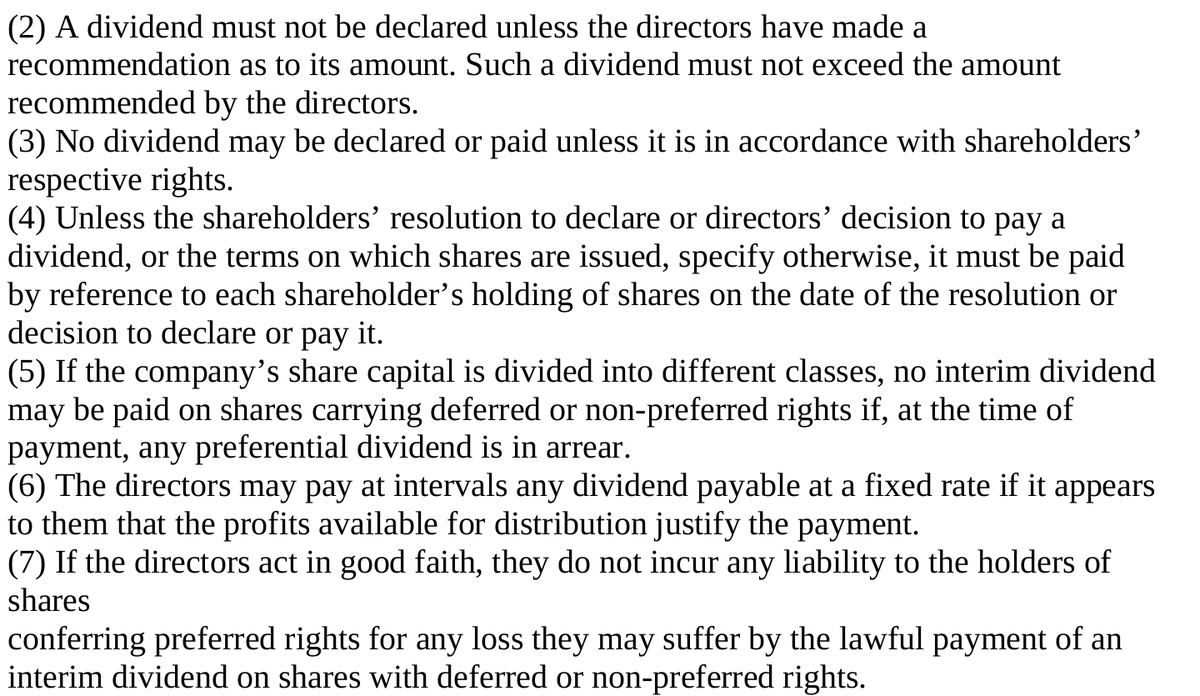
Model article 30 lets a company declare dividends by ordinary resolution and lets directors decide to pay interim dividends. It limits a declared dividend to the amount the directors recommend and requires respect for shareholders' rights. These are model provisions, so they say nothing about your company until you check the articles it actually adopted and its share terms. Those documents decide who approves the dividend and what each shareholder is entitled to receive.
GOV.UK also requires minutes of a directors' meeting, even for a sole director, and a voucher showing the date, the company, the shareholders' names and the dividend amount. The recipient gets a copy and the company keeps one. Do not assume missing paperwork automatically turns a payment into salary or a director's loan, because the tax and legal result depends on the facts.
File the evidence in decision order
Beyond those requirements, we suggest keeping the file in the order the decision was made. Put the relevant accounts and their date first, then the working from realised profits to the amount left after earlier distributions. Next comes a note on the current position, creditors and cash commitments, followed by the articles and share rights checked, the minutes and any member resolution the articles require. The vouchers, bank payment and accounting entry come last and should all agree to the approved amount.
In the example, the file stops at the second step. Before anyone drafts a voucher, the directors either reduce the proposal to an amount they can support or test whether interim accounts justify more.