
Short-life asset elections: check what happens when you sell the asset
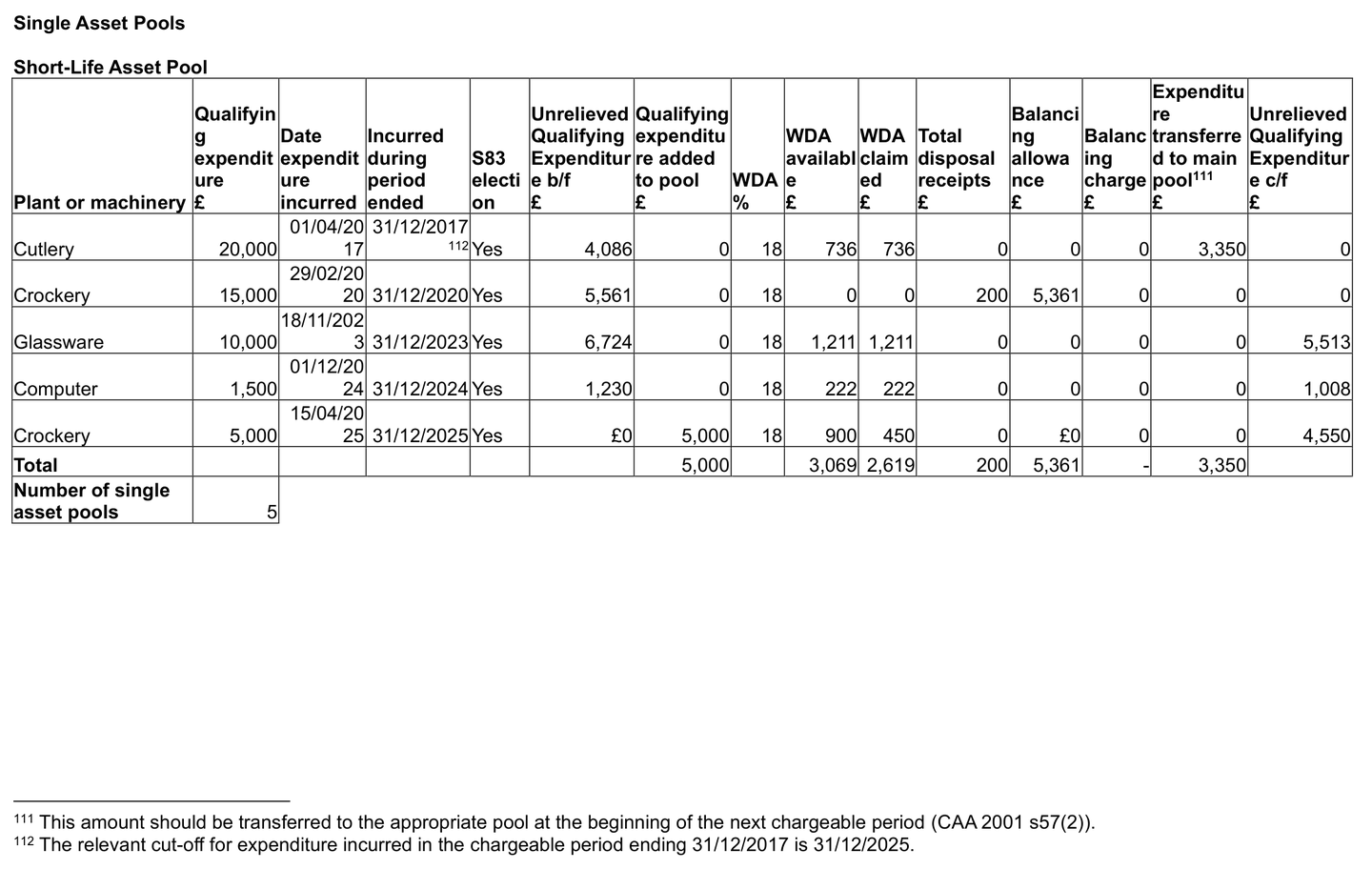
A short-life asset election under CAA 2001 s83 puts an eligible item of plant or machinery in its own pool. Where the disposal falls in the final chargeable period, which must end on or before the cut-off, the remaining pool balance is compared with the disposal value, which can produce a balancing allowance or a balancing charge. A disposal date before the cut-off does not settle this on its own. In a continuing main pool, the disposal value generally reduces the pool instead. The election changes timing, so it matters most where AIA or first-year relief does not already cover the cost.
A machine the company expects to replace soon
A trading company's board approves £20,000 of used machinery that it expects to replace within a short time, and its annual investment allowance has already gone on other purchases. The question for the tax computation is whether to put the machine in its own pool.
An election under CAA 2001 s83 places eligible plant or machinery in a single asset pool. Cars, assets with private use and special-rate assets are among the usual exclusions. For Corporation Tax, the main rate writing down allowance is 14% from 1 April 2026, and chargeable periods spanning that change use a hybrid rate.
Sources and context, checked :
Make the election in writing
The company elects in writing to HMRC, specifying the asset, its cost and the date the expenditure was incurred. The deadline is two years after the end of the chargeable period in which the expenditure was incurred, and the election is irrevocable. Where expenditure is incurred in parts, the date of the first expenditure matters. For a chargeable period ending 31 March 2027, the election is due by 31 March 2029.
HMRC's public guide says to notify through the tax return and describes the deadline loosely in terms of a tax year. For a company, the capital allowances manual and the legislation set the rule. Keep the election with the company return computation.
Sources and context, checked :
A hypothetical comparison
A trading company with a full chargeable period from 1 April 2026 to 31 March 2027 buys eligible used main-rate machinery for £20,000, with no recoverable VAT in the cost. It uses all available AIA elsewhere, claims no first-year relief on this item, makes a timely election and claims a full 14% writing down allowance. In the following chargeable period, well before the cut-off, it sells the machine at market value to an unconnected buyer for £5,000. There are no other additions to the single asset pool. For the main pool column, assume other assets keep the pool above the small pools allowance threshold. All figures are capital allowances tax values.
On these facts the election gives £12,200 of relief in the period of sale, with no second-year writing down allowance on the item. If the eligible disposal value were £18,000 instead, the single asset pool would give an £800 balancing charge.
| Step | Single asset pool | Continuing main pool |
|---|---|---|
| Addition, year to 31 March 2027 | £20,000 | £20,000 added to the pool |
| Writing down allowance at 14% | £2,800 | £2,800 attributable to the item |
| Carried forward | £17,200 | £17,200 within the pool balance |
| Sale in the following period | £5,000 disposal value | £5,000 deducted from the pool |
| Result | £12,200 balancing allowance and pool closes | No separate balancing allowance; £5,000 reduces the overall pool before its writing down allowance is worked out |
| Alternative disposal value of £18,000 | £800 balancing charge | £18,000 deducted from the pool |
Sources and context, checked :
Cut-off and disposal value
The cut-off is the eighth anniversary of the end of the chargeable period in which the expenditure was incurred, which can fall later than eight years from the invoice. On the hypothetical facts, that is 31 March 2035. If no final chargeable period ends on or before the cut-off, the remaining qualifying expenditure is allocated to the main pool for the first chargeable period ending after the cut-off.
On a disposal, compare the remaining pool balance with the eligible disposal value. That value is normally the sale proceeds, or market value where the rules require it. Sales at an undervalue or to a connected buyer bring in anti-avoidance and disposal value rules, so a nil or nominal price does not by itself give full relief. Assets on which full expensing was claimed have separate disposal rules.
Decide whether the election is worth making
Where AIA or immediate first-year relief covers the cost, the election may make no difference. Where it does apply, it changes when relief or a charge arises, and a high disposal value can bring a balancing charge forward. Treat it as a timing decision with its own evidence trail.
For any plant bought in the year to 31 March 2027 that AIA or first-year relief does not cover, record the expected disposal date and value, and diarise the 31 March 2029 election deadline.
- Asset description and confirmation it is not a car, a private-use asset or a special-rate asset
- Cost, date of first expenditure and chargeable period
- Copy of the written election and the date it was made
- Fixed asset register reference linking the tax pool to the accounting record
- Disposal date, buyer status and evidence of the disposal value
Sources and context, checked :