
Overseas service invoices: the missing VAT may belong on your return
An accounts payable team receives a £2,000 consultancy invoice from an overseas supplier. It shows no UK VAT, so a no-VAT code looks like the obvious choice. That may be wrong. If the reverse charge applies, the business accounts for output VAT itself, then works out separately how much input VAT it can recover. The two amounts do not necessarily cancel.
Classify the service first
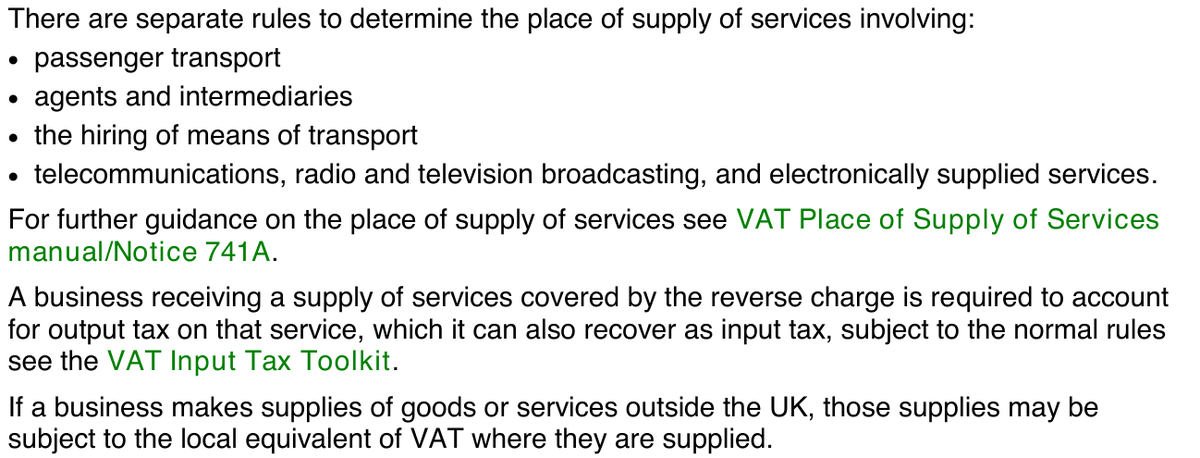
An overseas supplier and an invoice without VAT do not establish the reverse charge. Consider the special place-of-supply rules first. These include land-related services, event admission, transport hire, restaurant and catering services, and use-and-enjoyment provisions.
If no special rule applies, a business-to-business service under the general rule is supplied where the customer belongs. That depends on establishments, so bank details, invoice currency or a registered office address alone will not decide it.
For a UK recipient, an overseas supplier and a taxable service supplied in the UK, the reverse charge generally applies. Services outside the general rule also require the UK customer to be VAT registered, and opted supplies of land are excluded.
A non-UK supplier's UK VAT number does not by itself remove the reverse charge. If that supplier charges UK VAT in error on a reverse-charge service, ask for a corrected invoice and still apply the reverse charge.
Sources and context, checked :
What goes on the VAT return
Output VAT on the full value of the supply goes in box 1. Input VAT recoverable under the normal rules goes in box 4. The full value of the service goes in both box 6 and box 7.
The input VAT claim needs its own support. It may be restricted, for example because the service relates to exempt activity. The transaction has no net VAT cost only where all the reverse-charge input VAT is recoverable.
Sources and context, checked :
A hypothetical invoice
Assume a UK VAT-registered business receives the £2,000 standard-rated consultancy service at its UK establishment from a supplier belonging overseas. The general rule applies, with no special rule or exemption. The partial exemption rules give 60% input VAT recovery, with no de minimis full recovery. That 60% is an assumption for this example, and a real percentage comes from the applicable rules, not from choice.
Output VAT is £2,000 × 20% = £400. Recoverable input VAT is £400 × 60% = £240, which leaves a net VAT cost of £160. If the business could recover all the input VAT, the net cost would be zero, but it would still make every return entry.
| Return line | 60% recovery | Full recovery |
|---|---|---|
| Box 1, output VAT | £400 | £400 |
| Box 4, input VAT | £240 | £400 |
| Box 6, outputs | £2,000 | £2,000 |
| Box 7, inputs | £2,000 | £2,000 |
| Net VAT cost | £160 | £0 |
Review the invoice before coding it
Check that the VAT code records the reverse-charge entries in boxes 1, 4, 6 and 7, including any restriction on input VAT recovery. A code that simply treats the purchase as carrying no VAT may miss some of those entries. This treatment is also separate from the domestic construction reverse charge, which can have different return treatment, and from postponed VAT on imported goods. A short review step before coding keeps those routes apart.
- Identify the service and the establishments that contracted for and received it.
- Check the special place-of-supply rules, VAT liability and reverse-charge scope.
- Record output VAT on the full value, then support the input VAT entitlement separately.
- Reconcile the entries in boxes 1, 4, 6 and 7 for each invoice.