
Partial exemption: reconcile provisional VAT recovery to the whole year
A partial-exemption annual adjustment recalculates recovery for the whole year, then compares it with provisional claims. It does not apply one sales percentage to every purchase. Direct attribution comes first, residual VAT receives the appropriate share, and the de minimis tests can change the result before the difference reaches the correct return.
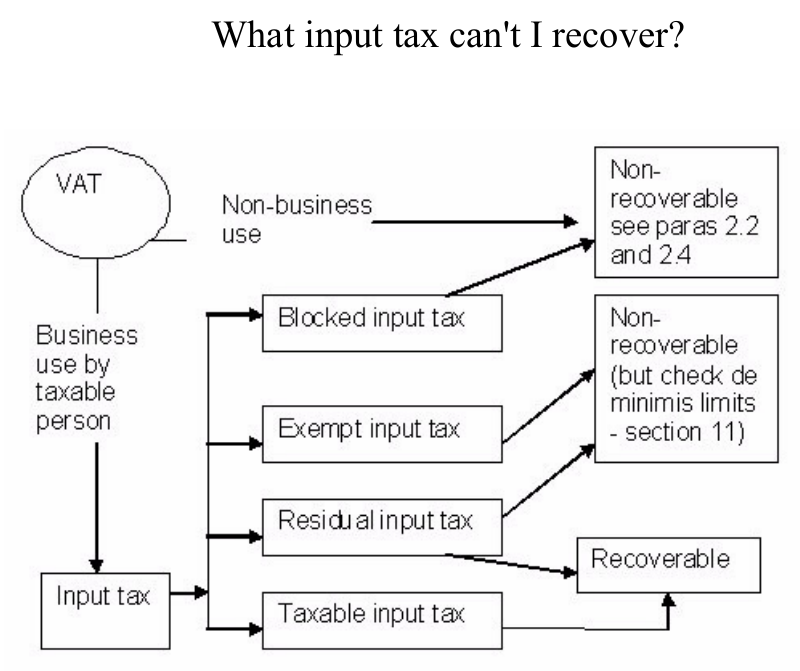
Keep direct and residual input VAT apart
Under the normal UK values-based standard method, input VAT directly attributable to taxable supplies is recoverable, while directly exempt input VAT normally is not. Residual input VAT is apportioned using the relevant taxable share of supplies. Remove nonbusiness and blocked VAT before this calculation; a recovery percentage cannot make those amounts eligible.
The previous annual percentage can be used consistently as the provisional rate where the notice's conditions are met. The annual calculation then uses the whole longer period's supplies and reviews attribution. It is not an average of quarterly percentages. Exempt supplies also differ from zero-rated taxable supplies.
The partial-exemption year follows the applicable return stagger and need not match the company's accounts year. The standard method has exclusions, rounding rules and fairness requirements. The example assumes these have been addressed and that no special method, override or Capital Goods Scheme adjustment changes it.
A historical annual schedule with £4,000 more recovery
All amounts and circumstances are hypothetical. An established business has a full partial-exemption year from 1 April 2025 to 31 March 2026. Its permitted prior annual rate of 60% was used consistently for provisional recovery. Total eligible input VAT is £50,000: £24,000 directly taxable, £6,000 directly exempt and £20,000 residual.
Provisional recovery is £24,000 plus 60% of £20,000, or £36,000. Assume each quarter incurred one quarter of those input categories. Quarterly exempt input VAT is then £1,500 directly exempt plus 40% of £5,000 residual, totalling £3,500. This exceeds £625 × 3, or £1,875, so in-year de minimis recovery does not increase the provisional claims.
Whole-year supplies, excluding VAT and after the required exclusions, are £800,000 taxable and £200,000 exempt. The annual taxable percentage is £800,000 divided by £1,000,000, exactly 80%. There is no rounding difference in this case.
Final recoverable VAT before the annual de minimis review is £24,000 plus 80% of £20,000, or £40,000. Annual exempt input VAT is £6,000 directly exempt plus the unrecovered £4,000 of residual VAT, totalling £10,000.
| Measure | Provisional | Annual |
|---|---|---|
| Direct taxable VAT recovered | £24,000 | £24,000 |
| Residual VAT recovery rate | 60% | 80% |
| Residual VAT recovered | £12,000 | £16,000 |
| Total recovered | £36,000 | £40,000 |
| Additional annual recovery | £4,000 |
Both de minimis conditions matter
The original de minimis test requires exempt input VAT to be no more than £625 per month on average and no more than half of total input VAT. Here £10,000 divided by 12 is approximately £833.33 a month, above £625. Although £10,000 is below half of £50,000, passing that condition alone is insufficient.
The simplified tests do not rescue these facts either. Total input VAT is £50,000 ÷ 12, about £4,166.67 per month; after subtracting directly taxable VAT it is £26,000 ÷ 12, about £2,166.67 per month. Both exceed £625. Recovery therefore remains £40,000. Compare that with the £36,000 provisionally claimed to produce £4,000 additional recovery, rather than recovering all £50,000.
Sources and context, checked :
Put the adjustment in its proper return
For this historical year ended 31 March 2026, the annual adjustment normally belongs in the first return after year end, with an option to bring it into the last return of that year. It is not an instruction to add £4,000 to whichever return is current when this example is read in October. A missed or incorrect adjustment needs its own timing and correction review.
Keep the method, year, provisional rate basis, attribution, annual supplies, de minimis review, provisional claims and return used in one file. A valid annual true-up differs from a classification error that was wrong from the outset. Reconcile the final difference to the return so the £4,000 is claimed once.