
S corporation reasonable compensation: support officer pay before distributions
Hypothetical situation: an S corporation owner who works in the business, takes $20,000 through payroll and $80,000 as distributions has a classification question, not only a cash question. IRS guidance says an S corporation must pay a shareholder-employee reasonable compensation for services before making non-wage distributions to that shareholder-employee. If wages are too low for the work performed, the IRS may reclassify distributions as wages subject to employment taxes. The decision starts with evidence about the work, not with whichever split keeps the most cash outside payroll.
Who this applies to
Federal payroll rules generally treat corporate officers as employees. IRS Publication 15-A describes a narrow exception for an officer who performs no services or only minor services and who neither receives nor is entitled to receive any remuneration.
This article deals with the other case: a shareholder who performs services for the corporation and receives payments from it. It does not reach state payroll rules, salary benchmarks or whether a distribution is tax-free under the basis rules. Draw treatment for a sole proprietor does not carry over to a corporation.
Sources and context, checked :
What the IRS looks at
The IRS page on S corporation compensation focuses on what the shareholder actually did. It asks whether the corporation's receipts come from the shareholder's own services, from the work of other employees or from capital and equipment. Administrative work that supports income-producing employees or assets still counts as services.
Relevant factors listed by the IRS include training, duties, time spent, comparable pay for similar services, payments to other employees, compensation agreements and the history of dividends and bonuses. The guidance does not set a fixed percentage split between salary and distributions. It also notes that reasonable compensation does not exceed the amounts the shareholder received directly or indirectly.
Sources and context, checked :
Where officer pay appears on the return
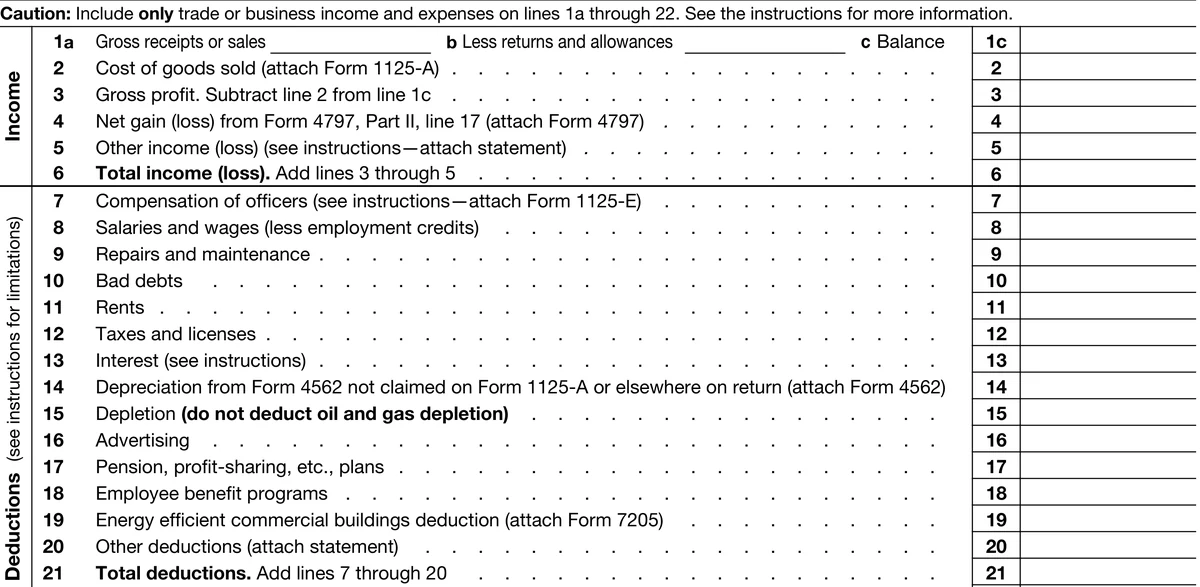
The 2025 Instructions for Form 1120-S say distributions and other payments to an officer are treated as wages to the extent they represent reasonable compensation. In those instructions, officer compensation generally goes on line 7 and other employees' salaries and wages on line 8, excluding amounts reported elsewhere on the return. Confirm the line numbers in the instructions for the year actually being filed.
Sources and context, checked :
A hypothetical shortfall
Hypothetical: the corporation has recorded $20,000 of gross officer wages and $80,000 of distributions to a working shareholder. A separate, properly supported compensation review has established $60,000 as reasonable for the services actually performed. That $60,000 is an assumption for this invented case, not a market rate or an IRS safe harbor. Payroll tax cash effects and other distribution restrictions are ignored.
On these facts, $40,000 of the payments labelled distributions cannot simply stay classified as non-wage distributions. The remaining $40,000 is not automatically tax-free either, because shareholder basis and other rules are separate questions. Relabelling ledger entries or backdating payroll does not correct payroll returns that have already been filed.
| Item | Amount |
|---|---|
| Supported compensation from the review | $60,000 |
| Gross officer wages recorded | $20,000 |
| Payments needing wage-classification review | $40,000 |
| Remaining payments labelled distributions | $40,000 |
Build the compensation file
The support for officer pay is easier to assemble during the year than after a question arises. A useful file contains the following.
- A role description and dated records of time and work, updated when duties change.
- Comparable pay sources, with the period, location and responsibilities they cover and why they fit.
- Notes on work done by other employees and on returns that come from equipment or capital.
- A reconciliation of gross payroll, officer compensation and every direct or indirect payment to the shareholder.
Next action
Run the reconciliation for the current year now. If it shows a possible shortfall, send it to the payroll and return preparer with the period it covers and the supporting review, so the correction is decided on the evidence rather than by editing ledger labels.